How to Break In a Generator: Step-by-Step (Plus the 5-Hour Oil Change)
**Quick answer:** Break in a new generator over about 5 hours of running, split into sessions with full cool-downs between them: start with no load, then work up through roughly 25%, 50%, and 75% of rated watts while varying the load, and change the oil at 5 hours with conventional 10W-30. Done right, the piston rings seat against the cylinder wall and the engine keeps its compression and clean oil for life; idling for hours or sustained full load in those first hours are the two patterns to avoid.
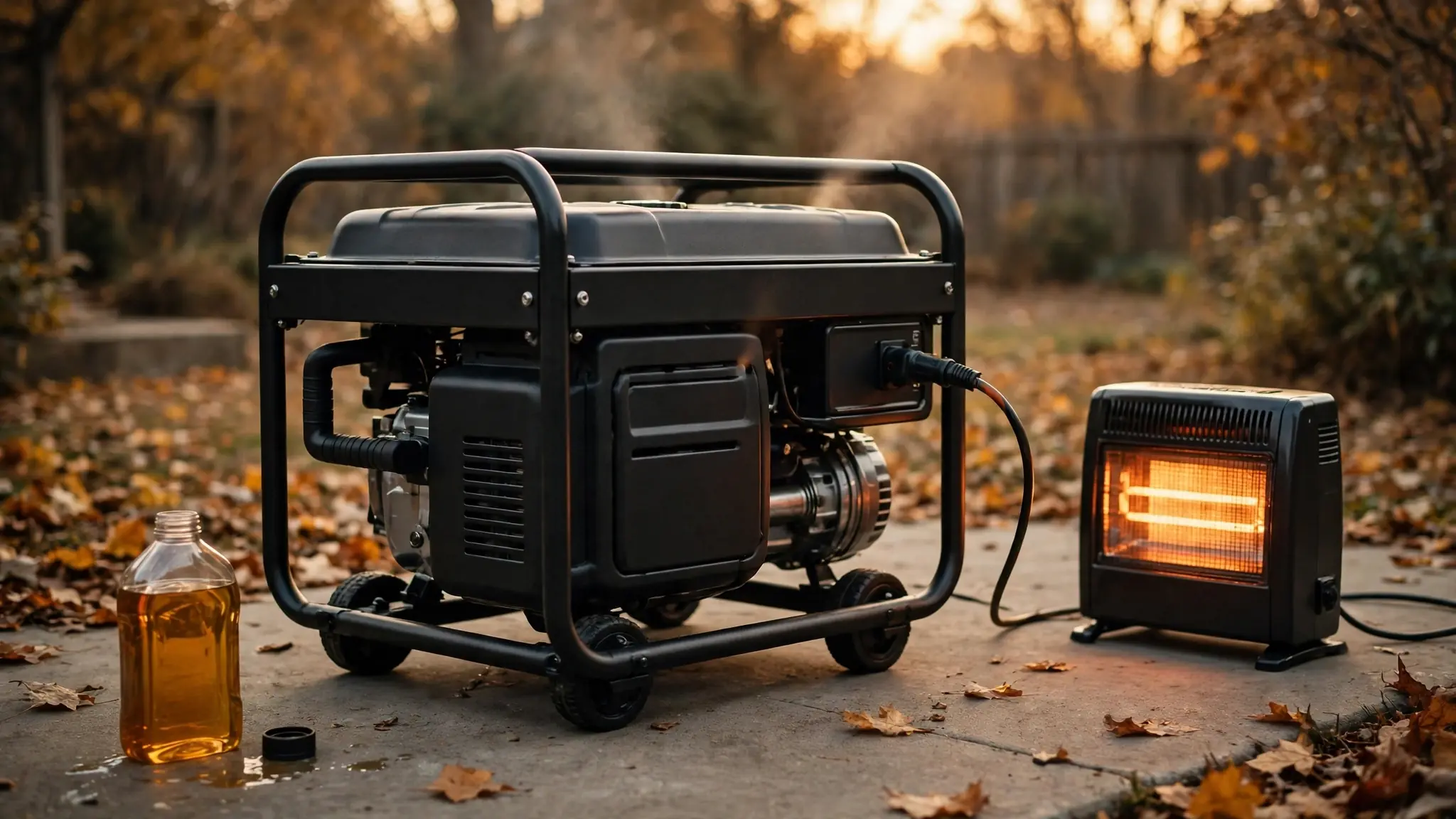
Quick answer: Break in a new generator over about 5 hours of running, split into sessions with full cool-downs between them: start with no load, then work up through roughly 25%, 50%, and 75% of rated watts while varying the load, and change the oil at 5 hours with conventional 10W-30. Done right, the piston rings seat against the cylinder wall and the engine keeps its compression and clean oil for life; idling for hours or sustained full load in those first hours are the two patterns to avoid.
Most people learn how to break in a generator exactly one storm too late. They unbox it with the power already out, plug in everything they own, and run it flat-out for two days straight. I’ve serviced those engines afterward — oil consumption at 200 hours that a healthy engine shouldn’t show at 2,000.
Break-in isn’t superstition, and it isn’t a weekend project either. It’s about five hours of deliberate running, done once, that decides how well your piston rings seal for the life of the engine. Here’s the procedure I walk my customers through — the same one I used on my own standby unit.
Why does break-in matter on a small engine?
Two things happen in a new engine’s first hours, and both of them only happen once.
The rings have to seat. Your piston rings don’t seal against a mirror-smooth cylinder — they seal against a fine crosshatch pattern machined into the cylinder wall. Combustion pressure gets behind the top ring and presses it outward, and over the first hours the ring face and the crosshatch wear into each other until they match. Done right, you get a tight seal: full compression, minimal blow-by, clean oil. Done wrong — pinned at full load immediately, or idled for hours with almost no cylinder pressure — the crosshatch can glaze over before the rings seat, and that seal never fully forms.
The first oil carries the debris. A new engine sheds: tiny machining chips, casting sand the factory wash missed, and the wear particles from every fresh metal surface finding its mate. All of it ends up in the oil, circulating through bearings that would rather it didn’t. That’s why the first oil change comes at 5 hours instead of the usual 100 — and why that first drained oil often has a metallic sheen you’ll never see again. If yours doesn’t glitter at all, don’t worry. If it looks like metalflake paint, that’s exactly what break-in oil is supposed to catch.
What do you need before the first start?
Gather this before the engine ever fires:
- Conventional 10W-30 oil, enough for the fill plus the first change. Most portables take 0.6 to 1.1 quarts (a Honda EU2200i takes 0.42 qt, a Generac GP6500 about 1.06 qt — check your manual). Conventional, not synthetic, for the reason in the FAQ above.
- Fresh gasoline. Break-in is not the time for the gas can that’s been in the shed since spring. More on fuel below.
- A plug-in hour meter if your generator doesn’t have one built in (about $12–15). “About five hours” guessed from memory is how first oil changes happen at 40 hours.
- A stack of varied loads. A space heater with low/high settings (750/1,500W) is the perfect break-in load — cheap, adjustable, and indifferent to dirty power. Add a hair dryer (~1,200–1,500W), a halogen work light or two, and a box fan.
- A magnetic drain plug (roughly $12–18, optional but smart). See the oil-change section.
- Your manual. Honda, Champion, Westinghouse, and Generac all print a break-in or first-service note. If your manual’s numbers differ from mine, the manual wins — it’s their engine and their warranty.
Safety, same as always: run it outdoors, at least 20 feet from the house with the exhaust pointed away, and let it cool before you touch the drain plug. Our full storm preparedness checklist covers placement and CO safety if you want the longer version.
How do you break in a generator, step by step?
Step 1: Fill, inspect, and first start (no load, 5 minutes)
Add oil to the full mark on a level surface, add fuel, and open the fuel valve. Before starting, take 30 seconds to look the unit over — shipping shakes things loose, and I have genuinely found a dangling spark plug boot on a brand-new machine.
Start it with nothing plugged in and let it run about 5 minutes. Listen. A new engine should settle into a steady idle. Note anything odd — surging, popping, a rattle that doesn’t belong — because “it made that noise from day one” is valuable information if you ever make a warranty claim. Check for oil or fuel leaks, then shut it down and let it cool completely. That’s your first heat cycle, and it counts.
Step 2: First running hour — around 25% load
Restart and plug in roughly a quarter of the generator’s rated running watts. On a 5,000-watt portable that’s about 1,250W — the space heater on low plus a work light. Run 30–45 minutes, varying the load every 10 minutes or so: heater up, heater down, fan on, fan off. Variation is the point. Changes in load change combustion pressure, and pressure is what presses the rings against the wall.
Shut it down and let it cool to ambient — 20–30 minutes minimum. These full cool-downs are not downtime; the heat cycles are part of the process, as metal expands and contracts into its working shape.
Step 3: Hours 1–3 — up to 50% load
Same pattern, bigger loads: ~2,500W on that 5,000-watt unit (heater on high plus the hair dryer, cycled on and off). Keep sessions to 30–45 minutes with full cool-downs between them. By now the engine note usually smooths out noticeably — that change in sound is the rings coming in.
Step 4: Hours 3–5 — up to 75% load, briefly higher
Work up to about 75% of rated watts (~3,750W on the example). In the last hour, a few short touches of near-full load — two or three minutes at a time — are fine and honestly healthy; the rings need to see real pressure. What you’re avoiding is sustained maximum output, not maximum output itself.
What should you avoid during the first 5 hours?
- Hours of idling or near-zero load. This is the classic mistake — “I ran it all afternoon with nothing plugged in to break it in.” Low load means low cylinder pressure, weak ring contact, and cool combustion that lays down glaze. Idling is the one pattern that can genuinely un-break-in an engine.
- Sustained full load. A full bank of space heaters for three straight hours on a green engine overheats rings that haven’t found their shape yet.
- Lugging it. Repeatedly stalling or nearly stalling the engine with motor-start surges it can’t handle. Size your loads to the machine (our generator fuel consumption guide has realistic per-load numbers if you’re planning a load bank).
When do you change the oil during break-in?
This schedule matters more than anything above:
| Oil change | When | What to use |
|---|---|---|
| First change | At 5 hours (or right after break-in) | Conventional 10W-30 |
| Second change | At 20–25 hours total | Conventional or synthetic |
| After that | Every 100 hours or per manual / seasonally | Your normal oil |
Drain it warm, not hot — run the engine two minutes, shut it off, wait a couple of minutes, then pull the plug. That first drain is the one I want you to actually look at. Pour it through a coffee filter or paint strainer over your drain pan. A few bright specks are normal. Strips, curls, or anything you can pick up and bend are not — that’s a warranty conversation while the machine is still new.
The nerdy-but-worth-it touches: a magnetic drain plug installed at the first change will show you a fine gray fur of ferrous particles at the second change — proof the process is working, and it keeps that metal out of circulation in between. And if you want a real answer instead of folklore, a mail-in oil analysis (about $30–40 from Blackstone or a NAPA kit) at the second change will tell you exactly how much wear metal your engine made and whether it’s trending down like it should. I do this on standby installs I maintain; the second report almost always shows wear metals falling off a cliff, which is the signature of rings that seated.
If your engine burns a little oil during break-in, don’t panic — a few ounces across the first 20 hours while rings seat is normal. Oil consumption that continues past 25 hours is not. Persistent consumption on a young engine is exactly what a proper break-in prevents; our generator maintenance checklist has the consumption and inspection routine for life after break-in.
Is break-in different for inverter generators?
Mostly in one way: turn Eco mode off. Inverter generators (Honda EU series, Predator 3500, Westinghouse iGen) vary engine speed with load, and Eco throttle will happily let the engine loaf along at low RPM sipping fuel — precisely the low-pressure condition you’re trying to avoid. Break it in with Eco off so the engine works through its RPM range as you vary the loads.
Otherwise the procedure is the same, scaled down. Small inverters have tiny sumps — the EU2200i’s 0.42 quart means the same debris is concentrated in half the oil, which makes the 5-hour change more important, not less. And because inverters are quiet and pleasant, they’re the ones people idle for whole afternoons. Don’t.
What about standby generators — do they need break-in?
Largely, no — and here’s why. A Generac, Kohler, or Cummins standby is run at the factory, then run again at dealer startup, usually under real house load or a load bank. The heavy seating work happens in those first runs whether anyone calls it break-in or not.
What the owner still owns:
- The first oil and filter service at the manual’s interval (Generac typically calls for an early first service, then annual or 200-hour intervals). Don’t skip it because “it only exercises” — those weekly 10-minute runs still accumulate, and the first-service oil still carries the debris.
- Exercise cycles are not break-in. A weekly no-load exercise run keeps seals wet and batteries charged; it does not seat rings, and it can’t substitute for the unit occasionally running under real load.
- Records. Standby warranties run 5 years or more, and a dated log of the first service is cheap insurance.
If your standby was installed without a loaded startup run — it happens — tell your dealer. A loaded run in the first year closes the gap, and it’s their job, not yours.
What fuel should you use for break-in?
Fresh regular 87-octane gasoline, bought this week. Two warnings:
- Never E15 or E85 in a small engine not rated for it (most aren’t) — the extra ethanol runs lean and eats fuel-system parts. Check the pump; E15 is showing up at ordinary stations now.
- Ethanol-free fuel is a nice upgrade if it’s sold near you, mainly because break-in stretches across several days and E10 starts absorbing moisture the moment it sits. It’s optional, not required.
Skip the additive aisle. Break-in oils with zinc boosters, fuel catalysts, and “engine treatment” shots are solutions to problems your warranty-covered new engine doesn’t have. Add stabilizer only if the generator is going into storage afterward — and if storage is next, the generator won’t start troubleshooting guide shows what happens to engines that sat with untreated fuel.
What does skipping break-in actually cost you?
Honest answer: not a catastrophe. Modern machining is good, and a generator that never got a careful break-in will usually start and run for years. The cost shows up in the margins, around hour 300 and beyond:
- Oil consumption — the big one. An engine with glazed walls and half-seated rings might burn a quart between 100-hour services where a properly seated engine burns almost none.
- Blow-by and fouled plugs — combustion gas slipping past the rings pressurizes the crankcase and contaminates oil faster, shortening every oil change interval after.
- A few percent of power and compression, forever. You can’t re-break-in an engine at 500 hours; the crosshatch is gone.
Break-in is a one-afternoon insurance policy on an engine you’re expecting to last a decade or more — the math is easy. (Our piece on how long generators last covers what separates the 500-hour engines from the 3,000-hour ones.)
Break-in myths I hear constantly
“Rev it hard, right out of the box, to seat the rings.” Half-right idea, wrong method. Rings are seated by load — combustion pressure behind the ring — not by free-revving an unloaded engine, which mostly risks valve float and tells the rings nothing. Short loaded pulls near full output in the last break-in hour: good. Bouncing a cold, unloaded engine off its governor in the driveway: no.
“Just let it idle a few hours first.” Covered above, but it bears repeating because it’s the most common advice on the internet: extended idling is the single worst break-in pattern there is.
“It came with oil in it, so the factory broke it in.” The factory ran it long enough to verify it works — minutes, not hours. And many portables ship dry, with a bottle of oil in the box. If you didn’t add oil, check the dipstick before you pull that cord; low-oil shutdown may save you, but don’t bet an engine on a sensor.
Keep reading
Frequently asked questions
How long does it take to break in a new generator?
Plan on about 5 hours of running time for most portable generators, split across several sessions with cool-downs between them — not 5 hours straight. Honda, Champion, and Generac all land in that neighborhood in their manuals. After the 5-hour oil change, treat the engine gently until roughly 20–25 hours, then switch to the normal maintenance schedule.
What happens if you don't break in a generator?
It won't explode, and it will probably run fine for years. What you lose is ring seal: unseated rings and glazed cylinder walls mean the engine burns a little oil forever, loses a bit of compression, and fouls plugs faster. The engines I see at 300 hours burning a quart between changes are almost always the ones that were pinned at full load on day one.
Should you use synthetic oil to break in a generator?
Use conventional oil for the break-in fill and the 5-hour change — not because synthetic prevents ring seating (with modern ring packs that's mostly a myth), but because you're throwing this oil away after 5 hours and again at 20–25 hours. Cheap conventional 10W-30 at $5–7 a quart makes that painless. Switch to synthetic at the second or third change if you want it.
Can I use my new generator during an outage before it's broken in?
Yes — powering your fridge beats protecting a piston. Run it, but help it out: don't pin it at maximum output for hours, cycle the big loads instead of running everything at once, and let it cool down between long runs. Then do the 5-hour oil change as soon as the outage is over, even if the generator only has 3 hours on it.
What should the oil from the first 5-hour change look like?
Drain that first oil warm at the 5-hour change and actually look at it — pour it through a coffee filter or paint strainer over the drain pan. A metallic sheen and a few bright specks are normal: that is machining debris and wear particles from fresh surfaces finding their mates. Strips, curls, or pieces you can pick up and bend are not normal, and they are a warranty conversation while the machine is still new. A magnetic drain plug showing fine gray fur at the second change is likewise a good sign.